Case study 2: Planning and teaching for effective learning

Contextual Background

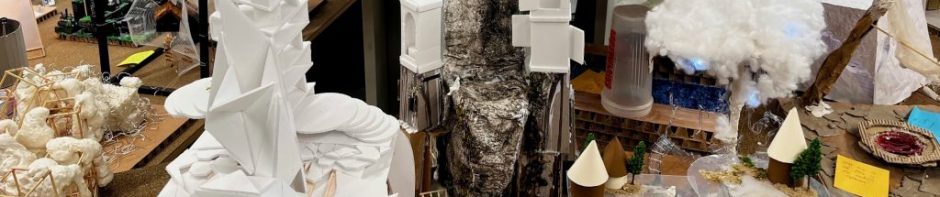
I temporarily reduced my technician contract to teach a five-week unit as an Associate Lecturer for first-year BA Interior and Spatial Design students. Students are divided into groups of 15, each assigned to a tutor. The unit is based on Invisible Cities (Calvino, 1972), and tasks students with interpreting a fictional city through a 30x30cm conceptual model. Challenges included the short timeframe, variable attendance, and translating literary descriptions into spatial forms. 

Evaluation

To support students in navigating the abstract brief, I provided a printed worksheet structured in two parts. The first focused on analysing the text, highlighting architectural, material, and thematic cues. The second shifted toward making, prompting students to consider materials, sketch iterations, and anticipate challenges. This helped students overcome creative blockages and begin making early. I also asked them to produce 2–5 iterations of a part of their model for the following week. This proved effective: students referred to the form often and appreciated the structure. 

Moving Forwards

The printed form I introduced was well received by students, and several kept referring to it in the first couple of weeks. It helped them break the initial hesitation and provided a structure they could either follow or adapt. This also proved helpful for me: when students haven’t started producing material yet, it can be difficult to engage in meaningful discussion and feedback. The worksheet created a shared ground from which we could discuss ideas with greater clarity. Structuring the early stages of a unit in this way aligns with findings that students benefit from clear scaffolding, especially when dealing with open-ended or conceptual briefs (Moon, 2004; Biggs and Tang, 2011). 

This approach mirrors strategies I already use in my technical teaching. When delivering Rhino 3D sessions, I often prepare partially completed files that students can begin to engage with straight away. I’ve found these sessions smoother and more focused, especially for those new to the software. Although it adds to my preparation time, it reduces stress for both me and the students. The more I plan the start of a session with clarity and intention, the more effective the learning seems to be. 

Our PGCert microteach was particularly helpful in that regard. Seeing how colleagues began their sessions—some through clear contextualisation, others through more playful, open-ended provocations—helped me reflect on my own assumptions about what “effective” teaching looks like. I realised I tend to over-structure, which may not suit every learner. I’m learning to adapt, and to recognise that multiple entry points can coexist within a session (Brookfield, 2017). 

Another technique I’ve used is showing students an example of a finished output at the beginning of a task. For instance, when introducing Rhino, I bring a small 3D-printed object based on the exact model we will be working on. It gives students a tangible goal and helps them stay engaged throughout the session. 

I’m starting to see more clearly that how a session or a unit starts has a significant impact on how students engage with it, especially in short units or fast-paced contexts. A well-thought-out beginning, whether it’s a visual reference or a guided worksheet, can help reduce anxiety and spark curiosity across a range of teaching settings. 

References 

Biggs, J. and Tang, C. (2011) Teaching for Quality Learning at University. 4th edn. Maidenhead: Open University Press. 

Brookfield, S. (2017) Becoming a Critically Reflective Teacher. 2nd edn. San Francisco: Jossey-Bass. 

Calvino, I. (1972) Invisible Cities. Translated by W. Weaver. London: Vintage Books. 

Moon, J. (2004) A Handbook of Reflective and Experiential Learning: Theory and Practice. London: RoutledgeFalmer. 

Posted in Unit 1 | Leave a comment

Case study 1: Knowing and responding to students’ diverse needs

Contextual Background
As part of my role as a specialist technician, I teach Rhino 3D to students from six different courses within the Interior Futures programme. These students vary in age, experience, and English proficiency. Rhino 3D relies on typed commands to initiate actions, making command recognition a key learning challenge, particularly for non-native speakers and students with learning difficulties.

Evaluation
My current approach introduces students to multiple workflows, encouraging them to develop their own based on their thought processes. I primarily demonstrate using typed commands, as I believe this builds a stronger foundation despite the steep learning curve. However, I recognise that this method presents additional challenges, particularly for students facing language barriers or processing difficulties such as dyslexia (CAST, 2018; Higher Education Academy, 2011).

I am now reflecting on how to integrate both text-based and icon-based workflows more equally. Finding a balance between the two would ensure that students who struggle with text-based commands can still develop a solid understanding, while maintaining the benefits of command learning for long-term proficiency.

Moving Forwards
Implementing a more inclusive approach will require significant adjustments to my teaching practice. Since my current method is rooted in my own workflow, this change will require training on alternative approaches, including learning new workflows and developing strategies to translate text-based commands into visual cues. A key challenge will be ensuring that students still memorise commands effectively if they rely more on pictograms (Jewitt, 2008).

One possible solution is to create a visual ‘dictionary’ of commands, pairing text-based commands with pictograms. This could be distributed alongside course materials after each session. I find the approach used in the official Rhino 3D training materials particularly effective, where each command is accompanied by a GIF demonstrating its function. A similar format could help students develop familiarity with commands while reinforcing their practical application.

Additionally, I would like to explore on-screen assistive tools that display commands and keystrokes as I type, similar to plugins that show real-time keyboard inputs. This would allow students to simultaneously hear, read, and visualise commands in a more accessible way, addressing issues related to dyslexia and language barriers (CAST, 2018).

As an alternative, I could incorporate short video recordings demonstrating individual commands within specific contexts. Rather than recording full exercises, these bite-sized clips could serve as an interactive command reference. This would provide a dynamic complement to written materials and cater to students who benefit from visual reinforcement (Schön, 1983).

Finally, I may consider consistently demonstrating alternative processes alongside my usual method. However, this would need to be tested carefully to ensure it does not cause confusion or slow down sessions unnecessarily. If direct implementation proves too time-consuming, video recordings could serve as an alternative means of supplementing student learning.

These strategies will reinforce learning for all students, extending beyond the initial distinction between text-based and visual learning approaches. I will implement them progressively to ensure that all students, regardless of their background or learning style, can engage effectively with the software while maintaining my strong belief that mastering commands will benefit them in the long run.

References

CAST (2018) Universal Design for Learning Guidelines version 2.2. Wakefield, MA: CAST. Available at: http://udlguidelines.cast.org (Accessed: 25 March 2025).

Higher Education Academy (2011) Embedding Equality and Diversity in the Curriculum: A Study of Staff and Student Perceptions. York: HEA.

Jewitt, C. (2008) ‘Multimodality and Literacy in School Classrooms’, Review of Research in Education, 32(1), pp. 241–267.

Schön, D. A. (1983) The Reflective Practitioner: How Professionals Think in Action. New York: Basic Books.

Posted in Unit 1 | Leave a comment

Review of Teaching Practice form – Observing a peer

17.01.25

Session/artefact to be observed/reviewed: 1:1 tutorials/feedback on design progress 

Size of student group: 4 interactions with successive students were observed 

Observer: Eden Chahal 

Observee: Fernanda Palmieri 

Note: This record is solely for exchanging developmental feedback between colleagues. Its reflective aspect informs PgCert and Fellowship assessment, but it is not an official evaluation of teaching and is not intended for other internal or legal applications such as probation or disciplinary action. 

Part One 

Complete Part 1 of the Observation Record and send it to your observer in advance.

This summarises the following:  

Status and history of the learning group  

  • Vertical Design Studio – BA Architecture  (Stage 2 and 3 students) 
  • Study Area 2024-25: Stratford Town Centre. 
  • External partners: Grow Studios, Creative Land Trust and Newham council. 
  • Course started in October with site visits and student presentations on their first impressions of the site (personal take) 
  • Then we meet the ‘partners’ in a learning forum, promoted discussions and exchanges (existing conditions/problems and conflicting desires for the area) 
  • Students then worked in groups to develop their research and a collective sensibility to the area and local communities. 
  • They used ‘situated actions’ as a tool of engagement and investigation, still working in groups, they devised urban strategies for the site. 
  • Each student then proposed a meanwhile intervention as a response to the group work and personal take/interest.  
  • The meanwhile project informed the design brief for the final project. 
  • Content of the session and its context within the curriculum  
  • At the moment they know: 

WHAT they are designing – individual building brief 

WHY they are designing it – research and strategy 

FOR WHOM – communities they engaged with or identified + Grow Studios 

WHERE the project site is – plans, sections, elevations of the existing project site + good analysis talking about the conditions observed, opportunities and constraints. 

Content of the session: 

Students are now working on their design development: HOW the architecture will respond/translate all the knowledge acquired. 

This is the first session after Christmas break and session 1 of 2  before the summative submission on Thu 30/01 – 

They are submitting their design portfolio (thesis) + reflective journal, which have to communicate fully communicate all their work (research, process and ideas/intents) because there is no opportunity to present work at this stage.  

Aims and objectives of the learning session  

Feedback on the development of the individual design proposals. 

Feedback on the portfolio – project narrative and graphical communication for submission. 

Anticipated outcomes of the learning session  

Clarity on: next design steps, and what to prioritize. 

Any potential difficulties or areas of concern  

Students were supposed to work independently before and after the Christmas break to push the development of their design project and be able to communicate key design intentions by this point. If students didn’t produce work independently they will be falling behind by now and a ‘catching up plan’ will have to be devised during the tutorials on Friday. 

How the students will be informed of the observation  

We have issued a tutorial list, the students attending the time slots under observation (afternoon) will be informed and consulted in the morning, prior to the event. 

Any particular aspects that you wish to receive feedback on  

Clarity in the verbal feedback, regarding design and regarding the portfolio which must communicate their responses in relation to the Learning Outcomes. 

Preferred time/place/medium for feedback  

I am happy to receive written and/or verbal feedback.  

Part Two 

I joined Fernanda for her 1:1 tutorial at CSM, observing her work with four students over 1 hour and 45 minutes as they discussed their individual projects. 

From the first interaction I observed, I noticed an ability to leave space for the students to express themselves. Even when students struggled to articulate their ideas—often messy at this stage of the process—Fernanda refrained from rephrasing or interrupting. Instead, she subtly allowed them the space and time to explore and articulate their thoughts. This approach is something I will reflect on and adapt in my teaching. 

Throughout the tutorials, I noticed a pattern in the way she led the feedback: 

  1. Uninterrupted time to present their work, without interjection (a comfortable 10 to 15 minutes). 
  1. Fernanda then took control of the discussion, delivering focused feedback that didn’t call for immediate dialogue. She began by highlighting the strengths of the project before suggesting multiple directions rather than prescribing a single solution. This always included sketching, acting as a demonstration of the design process, which she commented aloud: for instance, saying, “Here, if I draw a courtyard, I can check the plan to see if I could add openings. Once I have this sketch, I’d explore how it looks in section.” This method seems effective, putting the students in the position of the designer, I imagine it can ease apprehension about starting to draw – as they have already seen it in practice in a very concrete manner. Fernanda also used our direct environment as a tool of engagement and pedagogy, with 2 of the 4 students, she referred to the teaching space to give them an idea about volumetry. This is a spontaneous, directly actionable learning methodology for the students. For one, it was about visually measuring the room and comparing it to the space they were working on in their project. I can imagine this becoming part of the student’s independent study time – trying to absorb volumetrics, comparing them, to better understand and compose with spaces. 
  1. The sketching phase allowed to open a discussion, opening to a more interactive phase. 
  1. Each tutorial was concluded with clear suggestions for moving forward, covering references to explore, project directions, and the tools or resources students might use to represent their ideas. For one student, this approach uncovered a challenge with focusing on drawing, leading to a suggestion to alternate between mediums like model-making, drawing, and referencing. I imagine this to foresee a moment of panic and offer a lead on facing it during times of independent study. 

Even though the structure seemed to repeat itself, it was also tailored to each student. 

For example, one student seemed anxious, it was hard to tell if they were managing to fully focus on the discussion —nodding but not fully participating—Fernanda invited them to draw over a sketch. After taking a moment to compose themself, the student engaged with the drawing task. This easy step appeared to help them focus back on the discussion. In this specific case, I wondered if asking them to take notes or alternatively providing them with a written list of steps/tasks to complete, even remaining general, for their time of independent study might have been helpful, especially if a learning difficulty is at play. 

This observation left me curious whether this structure was a deliberate teaching strategy or one that Fernanda refined through experience. It’s a method I’m inspired to incorporate into my own teaching, particularly the calm and subtle way in which she guided discussions. 

Challenges 

I observed three possible challenges, which are not directly linked to the teaching but that could impact its delivery.   

  1. Tutorials took place in an open, shared space with multiple groups working at the same table, as well as other tutorials happening nearby. The resulting noise was distracting, and I imagine students—especially those with neurodivergent needs—could be affected. I lost focus more than once, particularly when discussions around where louder or more heated.  
  1. Students use a mix of hand drawings, printed plans, and on-screen work. Printed materials seemed to facilitate the most engaging discussions, allowing for live demonstrations and greater interactivity, including work in progress drawings. In contrast, on-screen work, such as unfinished InDesign presentations, was harder to engage with and less conducive to spontaneous feedback. While alternatives like larger screen presentations could help, they might demand polished work, which can be intimidating and incompatible with work-in-progress feedback. 
  1. With the one-on-one format, I noticed that students all left immediately after their sessions. Most were working before their feedback but left right after. A studio environment where they would be able to kick start what was just discussed or at least plan their work accordingly could be a lead to ensure the discussion doesn’t fade and is effectively activated.  

Discussion in small group of tutorials might allow students to observe more design demonstrations and develop critical thinking by seeing their peers receive feedback. However, I recognize that presenting in front of others may trigger anxiety for some students.  

Part Three 

Observee to reflect on the observer’s comments and describe how they will act on the feedback exchanged: 

It’s very interesting that Eden commented on my approach to actively create a space for the students to express their ideas.This is indeed something I learned and refined through experience. I remember having the urge to fill that space when I started teaching afraid that students would feel my silence uncomfortable or judgemental (1:1 tutorial is a form of informal assessment). 

As a tutor, seating across the student for a 1:1 tutorial is the time I must be fully at the moment with them, engaging with their ideas, looking for their rationality and interests which are not always translated into drawings or words. In one studio day as such, I might see 10 to 12 different students individually and in those 10/15 minutes I must adjust to the new student and situation, change the language I will use, pick the references I will bring and find the right way to conduct the conversation. I suppose this is one of the ways I practice reflective teaching.  

For the students, the 1:1 tutorial are an opportunity to talk about the work, formulate questions and identify struggles, which is probably the most important part of this interaction in terms of learning (metacognitive connections). That is why it is fundamentally important that the students perceive my curiosity and feel confident to take ownership of that space I am offering to them.  

Actions: 

  1. Open and shared studio spaces are challenging environments to teach. There were indeed moments when students asked to sit in a separate room for a more focused or private conversation, but I don’t normally offer that option to my students straight away. Maybe, for the 1:1 tutorial, I could ask them before we start and give the option of seating in a separate room. It would be interesting to know how they feel about it. However, space availability is a big issue at CSM and this might not be possible. 
  1. Yes, it’s very limiting when students bring all the work on the screen. Printed material facilitates the conversation and makes possible to think in a non-linear way – opposed to going from one slide or drawing to the other on the screen. However, there is a clear recommendation/guideline coming from the school that says we cannot demand that students print their work every session. My approach is to constantly talk about how important it is to look at multiple drawings and resources at the same time when designing, explain that design is not a linear process and that having lots of drawings on the table and moving between scales, aspects and media is a key part of design development. to encourage them to bring print outs, sketches and physical models.  
  1. Yes, submission time is tricky, you must see students individually (1:1) and focus on their individual submissions, and students tend to leave immediately after their tutorial sessions to get on with the work. The problem is that, on block 2 (after summative submissions), that pattern tends to remain, and it becomes very difficult to get back to the buzzing studio environment we had in term 1 when students were working in groups. Discussions in small groups are a good tactic, and I run the tutorials in small groups just after the submissions which was quite effective. Still, students left as a groups after the tutorials. I might try to implement a couple of ‘touch base points’ with the whole group during the studio day (quick group briefings conversations) and ask the students what they want to see/get out of these moments in terms of – resources, presentations, conversations. The moments we have to look at and study architecture together are always very precious and I learned that students really appreciate that. 
Posted in Unit 1 | Leave a comment

Review Of Teaching practice form – Being observed by a peer

30.01.25 

Size of student group: Cohort of 14 students – 1:1 tutorials  

Observer: Fernanda Palmieri  

Observee: Eden Chahal 

Note: This record is solely for exchanging developmental feedback between colleagues. Its reflective aspect informs PgCert and Fellowship assessment, but it is not an official evaluation of teaching and is not intended for other internal or legal applications such as probation or disciplinary action. 

Part One 

What is the context of this session/artefact within the curriculum? 

Students are enrolled in the Graduate Diploma in Interior Design, a one-year program designed for individuals from diverse academic and professional backgrounds who wish to transition into Interior Design. This results in a heterogeneous cohort with varying levels of experience. 

The observed session will be the final one before their Unit 1 submission. It is expected to consist of a series of 1:1 tutorials, potentially conducted in small groups (depending on the course leader). 

The year is divided into 2 Units, this is the end of Unit 1 which encompasses 3 projects. 

How long have you been working with this group and in what capacity? 

I have been working with this group since the beginning of the academic year. My role involves delivering technical sessions, specifically teaching Rhino 3D, and supporting tutors during studio sessions. 

What are the intended or expected learning outcomes? 

This session will provide final guidance and support, helping students refine their work before submission. This may include technical advice as well as design adjustments. 

What are the anticipated outputs (anything students will make/do)? 

Students will submit a portfolio showcasing the work they have developed since the start of the academic year. 

Are there potential difficulties or specific areas of concern? 

There are no specific concerns, apart from this being their final opportunity to receive feedback before submission. 

How will students be informed of the observation/review? 

They will be informed on the morning of the observation and will only participate if they feel comfortable. 

What would you particularly like feedback on? 

I would appreciate feedback on how I phrase explanations during tutorials and the clarity of my feedback. However, I am open to any insights Fernanda may find relevant. 

How will feedback be exchanged? 

Feedback will be provided through the form and, if time allows, through a verbal discussion. 

Part Two 

Observer to note down observations, suggestions and questions: 

On Thursday the 30th of February, I joined Eden for her morning session at the Chelsea College of Arts teaching the Graduate Diploma Interior Design in her capacity of technician and media tutor. My observation started at 10am (start of the studio day) and ended at 11:30. 

The session was structured in 2 different rooms. Room 1: students were working individually and had the opportunity to have 1:1 tutorial with Eden or the tutor in charge. Room 2: was set up for presentations and group discussions (feedback) with students and tutor sitting around a table and sharing the work on the wall using a projector. 

Eden started in room 01 with a ‘hands-on’ 1:1 tutorial, specifically looking at ‘what’ the student was trying to produce in terms of drawings/graphic content and showing ‘how’ to do it. She run the student through the software, took the actions step by step, shared the digital skills needed to fulfil the specific task, and asked the student to apply it there and then making sure they could do it by themselves. 

Then, she moved to room 2 and joined the group tutorials and presentations. There, I saw 3 student presentations/tutorials. Across all 3, Eden’s feedback was very focused on the different ‘media’ which students were using to explore and communicate their research, ideas and design work. Eden was very precise and clear in her feedback pointing it out, for example:  

  • Where a ‘collage’ was being used effectively to graphically communicate the important elements of their design project.   
  • When ‘photography’ of the existing site became crucial to anchor a project in a specific context. 
  • Where ‘mapping’ was not being used to its full potential, providing clear suggestions of how to improve/add to the map drawing to further explore the idea of an experiential journey. 
  • Where and how ‘physical models’ were being used effectively to experiment, develop and communicate the spatial structures and ideas. 
  • How ‘3D modelling’ was being under-explored as a tool when used to look/develop a structure from a distant top-down view, instead of used as a tool to explore internal spatial qualities such as views, inside/outside relationships, light and so on. 
  • And, how ‘plans’ can communicate complexity, challenging the student to use graphic overlays and annotation to communicate ideas of time, light, movement and inhabitation in their plan drawings. 

By focusing on the media and technical aspects of the work, Eden showed a great level of sensibility. Her approach was at the same time very constructive for the students, who are learning this new graphic language (design language), and respectful and complementary to the design tutor running the session, who focused their feedback on more conceptual and qualitative aspects of the design (design thinking).  

Suggestion: 

My one thought was that it could have been beneficial to share some references/precedents of drawings and techniques, either during the sessions or after (via email). By looking and studying ‘plan drawings’ that successfully communicate the idea of movement and time, for example, students can get inspired and understand how different graphic elements/devices were used, prompting them to explore something new. This would require extra work to build up, and constantly update, a portfolio/library of references (including student work from previous years), but it might be worth it. 

Reflection: language versus thinking 

The observation was very insightful and underlined how much I miss working with a technician/media tutor. Five years ago, when I was teaching Stage 1 BA architecture at CSM, I experienced a similar structure while working in a close partnership with a media tutor. Being able to integrate media studies in a way that students acquired the skills (language) to applied to the pedagogical and critical tasks proposed, gave them the confidence to take their first design steps (thinking). Unarguably crucial for Stage 1, I would argue that the fully integrated binary ‘language and thinking’ or ‘media and design’ would be very valuable across all BA level stages, where students are building fluency in the wonderful language of design while becoming design thinkers at the same time. 

Part Three 

Observee to reflect on the observer’s comments and describe how they will act on the feedback exchanged: 

Fernanda’s suggestion to provide more references is indeed an area where I recognise a gap in my teaching approach. I have only recently become more aware of this, particularly through my closer engagement with studios and, even more so, in my temporary role as an Associate Lecturer. One possible reason I have overlooked this aspect until now is the ambiguity of my role. While I am contracted as a technician, I am also involved in studio support—an aspect I find both enriching and complementary. Providing feedback on student projects often requires having a broader set of references readily available to guide their research process effectively. 

I have already started compiling references directly related to my technician role, such as those relevant to 3D printing and 3D scanning. The suggestion to build a library of references is particularly valuable, and I intend to implement this promptly. However, I anticipate a few challenges in doing so: 

  • Time investment: Building a meaningful and well-structured reference library will take time, as will regularly revisiting it to keep it fresh in my mind. To address this, I may dedicate time after my sessions—possibly on a weekly basis—to engage in research and update my collection. 
  • Providing references in the interim: While sending references to students after sessions would be beneficial, it is also time-consuming and does not strictly fall within my responsibilities, as I am not an academic. However, it could serve as a temporary measure while I develop a more structured reference system. 
  • Managing references for diverse student groups: I work with a large number of students across six different courses, spanning multiple year groups. This diversity necessitates a clear classification methodology to ensure that references are relevant to each specific cohort. I have encountered this challenge before when preparing presentations on 3D printing; for instance, the most suitable examples for MA Design and Maker students may differ from those best suited to first-year BA Interior Design students. 

Although these challenges require careful consideration, I recognise that improving my ability to provide relevant references will enhance the support I offer to students. 
Posted in Unit 1 | Leave a comment

Blog Post 1 : Space as a Pedagogical Tool 

Reframing My Practice 

When I began the PGCert, my focus was naturally directed toward improving my teaching practice—I understood it mainly as: how I communicate with students, design sessions, and engage both online and in person. I had not initially considered how indirect elements—like space—might shape learning. 

Reading the section on signature pedagogies in Teaching Practices for Creative Practitioners was a turning point. It introduced the idea of space as an active component of pedagogy, particularly in art and design contexts, and prompted me to think more critically about my own environment and its effects (Addison, 2014). 

Studio as a Site of Learning 

The reading described how, for art students, studios are not just spaces where learning happens—they are central to the learning itself. They allow for lingering with the work, exploration, dialogue, and developing a professional identity (Queen Mary University of London, 2024). 

Although I do not teach fine art students, I am an architect and teach across courses related to interior design and spatial studies. The reflections on studio space resonated strongly with me, and I could easily apply the same thinking to my own students. In fact, it struck me that all the interior design and spatial design courses I’ve encountered so far do not offer students a dedicated studio space. This seems like a missed opportunity, as the presence of a stable, shared environment could foster informal learning, ownership over the design process, and stronger peer-to-peer exchange—elements that are vital in shaping future design practitioners. 

This also connects to Professional Standard V1, which emphasises respect for individual and diverse learners and their varied needs in different settings (Advance HE, 2023). 

Observation Through a New Lens 

I took this awareness into a teaching observation of Fernanda at CSM, where I attended her 1:1 tutorials. Her teaching was carefully structured, sensitive, and responsive. Yet, what struck me most was how external spatial factors affected even the most refined teaching practice. 

The tutorials were conducted in a shared studio, where multiple discussions happened at the same table. At times, I struggled to focus due to louder conversations nearby, and I imagined how this could intensify anxiety for students, especially when they were presenting unfinished work. For students with concentration difficulties or neurodivergence, this setup could create unnecessary barriers. 

As PASSHE’s principle of student-centred learning reminds us, the learning environment must support equitable engagement for all learners—not just those who can adapt easily to distraction (PASSHE, 2023). This is echoed by Thomas (2010), who highlights how the physical, cultural, and social dimensions of space all influence students’ sense of belonging and engagement in higher education. 

Space and Inclusion 

This observation helped me reconsider how space intersects with inclusivity. As educators, we often focus on content, delivery, and engagement, but overlook the structural aspects that can empower or alienate students. This connects to V2 of the PSF, which calls for promoting equitable opportunities for all learners to reach their potential (Advance HE, 2023). 

Moving Forward 

This experience has reshaped how I approach my teaching. I now consider space not as a neutral backdrop, but as an active participant in learning. I plan to advocate for environments that are quiet, clearly designated, and supportive of focused one-to-one work—particularly for students who are already navigating additional learning barriers. 

In doing so, I hope to better align my practice with the values of equity, reflection, and inclusion promoted by both the PGCert and the Professional Standards Framework. As I move forward, I aim to design learning experiences not only through the lens of content, but also through a critical awareness of context. 

References  

Addison, N. (2014) ‘Doubting Learning Outcomes: Creative Relational Engagement in Fine Art Pedagogy’, in James, N. (ed.) Teaching Practices for Creative Practitioners. London: Guardian/HEA. 

Advance HE (2023) Professional Standards Framework for teaching and supporting learning in higher education. Available at: https://www.advance-he.ac.uk  

PASSHE (2023) PASSHE’s 7 Principles for Inclusive Practice. Available at: https://passhe.org.uk/passhes-7-principles/  

Queen Mary University of London (2024) Reflecting on Practice. Available at: https://www.qmul.ac.uk/queenmaryacademy/educators/resources/education-practice/reflecting-on-practice/  

Thomas, L. (2010) Student Engagement and Belonging in Higher Education. York: Higher Education Academy. Available at: https://s3.eu-west-2.amazonaws.com/assets.creode.advancehe-document-manager/documents/hea/private/What_works_-_student_engagement_and_belonging_1568036657.pdf  

Posted in Unit 1 | Leave a comment

Protected: Introduction

This content is password-protected. To view it, please enter your password below:

Posted in Uncategorised | Enter your password to view comments.